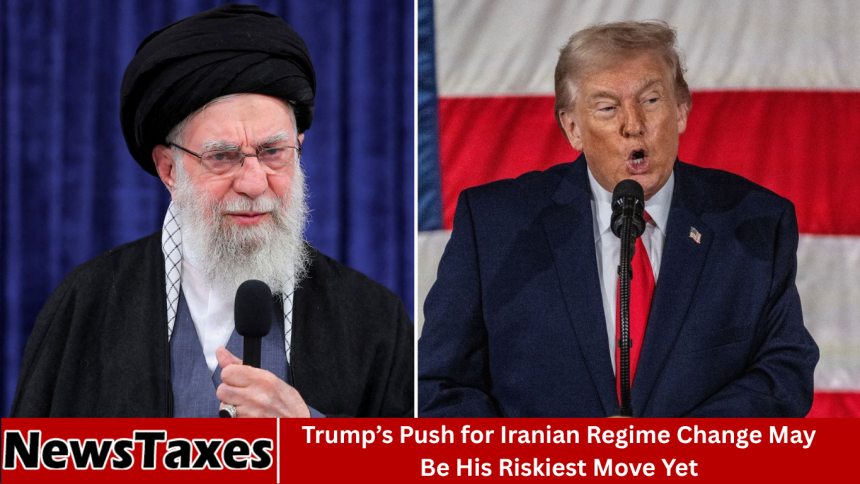
The possibility of regime change in Iran has long been one of the most controversial and consequential ideas in global politics. Now, as Donald Trump signals renewed interest in confronting Tehran more aggressively, discussions about forcing political transformation in Iran are once again gaining momentum.
Supporters see it as a bold strategy to reshape the Middle East. Critics, however, warn it could become one of the most dangerous geopolitical gambles in modern history. Trump’s foreign policy approach has always leaned toward dramatic moves and high-stakes decision-making.
From withdrawing from international agreements to imposing sweeping sanctions, his actions have often disrupted longstanding diplomatic norms. But pushing for regime change in Iran represents a different level of risk—one that could reshape not only U.S.-Iran relations but also the broader global balance of power.
More Read: Public Opinion Split: Only 21% Support U.S. Attack on Iran
Understanding the History of U.S.-Iran Tensions
To understand why regime change in Iran is such a risky strategy, it’s essential to look at the complicated history between Washington and Tehran. Relations between the United States and Iran have been strained for decades.
Tensions date back to the 1979 Iranian Revolution, which overthrew Iran’s monarchy and established the Islamic Republic. The crisis deepened when American diplomats were taken hostage at the U.S. Embassy in Tehran, creating a diplomatic rupture that still influences relations today.
Over the years, disagreements have centered on:
- Iran’s nuclear ambitions
- Regional influence in the Middle East
- Support for militant groups
- Economic sanctions
- Military confrontations
When Trump entered office in 2017, he adopted a tougher stance toward Iran than previous administrations. His decision to withdraw from the nuclear agreement negotiated under Barack Obama marked a major shift in policy.
Trump argued that the deal failed to address Iran’s missile program and regional activities. Instead, he pursued a “maximum pressure” strategy aimed at weakening Iran economically and politically.
This strategy laid the groundwork for discussions about regime change.
The Concept of Regime Change
Regime change refers to efforts to replace a country’s government, either through diplomatic pressure, economic sanctions, or military intervention. In the case of Iran, supporters argue that changing the leadership could lead to:
- A more democratic government
- Reduced regional conflict
- Improved relations with Western nations
- Greater economic stability
However, history shows that regime change is rarely simple.
Past attempts by the United States to influence political outcomes in other countries have produced mixed results. The experiences in Iraq, Afghanistan, and Libya demonstrate that removing governments can lead to prolonged instability, civil conflict, and unintended consequences.
That is why Trump’s potential push for regime change in Iran is seen as a particularly high-risk move.
Why Trump Might Pursue Regime Change
Several factors could motivate Trump to pursue regime change in Iran.
National Security Concerns
Trump has frequently described Iran as a major threat to U.S. interests. His administration argued that Tehran’s influence across the Middle East—particularly in Iraq, Syria, Lebanon, and Yemen—destabilizes the region.
From this perspective, replacing Iran’s leadership could weaken these networks and reduce tensions.
Political Strategy
Foreign policy decisions often carry domestic political implications. Taking a tough stance on Iran may appeal to voters who favor strong national security policies.
Trump’s political brand has always emphasized bold leadership and decisive action. Advocating regime change could reinforce that image.
Economic Pressure
The “maximum pressure” campaign imposed sanctions targeting Iran’s economy. These sanctions aimed to reduce oil exports, weaken the currency, and create internal pressure on the government.
Supporters argue that economic strain could encourage political change from within.
The Risks of Regime Change
While some see opportunity, critics warn of serious risks.
Regional Instability
Iran plays a central role in Middle Eastern geopolitics. Any sudden change in leadership could trigger instability across the region.
Countries that could be affected include:
- Iraq
- Syria
- Lebanon
- Yemen
- Gulf states
These regions already face political challenges, and instability in Iran could exacerbate tensions.
Military Conflict
One of the biggest concerns is the possibility of military escalation. Iran has a significant military presence and regional alliances. A confrontation could lead to wider conflict.
Military conflict would carry major consequences:
- Rising oil prices
- Disrupted global trade
- Humanitarian crises
- Increased refugee flows
These outcomes could impact not only the Middle East but the global economy.
Lessons From Past Regime Change Efforts
Historical examples highlight why regime change can be unpredictable.
Iraq
The removal of Saddam Hussein led to years of instability, insurgency, and political conflict. Although new democratic institutions were established, the process proved long and costly.
Libya
The fall of Muammar Gaddafi resulted in ongoing instability and competing governments.
Afghanistan
Efforts to rebuild governance structures proved challenging and prolonged.
These examples demonstrate that removing leadership does not guarantee stability.
International Reaction
Trump’s push for regime change in Iran would likely draw strong reactions from the international community.
Countries like:
- Russia
- China
- European Union
may oppose aggressive policies toward Iran.
These nations often advocate diplomatic engagement rather than confrontation. Their opposition could complicate efforts and increase geopolitical tensions.
Economic Implications
Iran is a major oil producer. Any instability could affect global energy markets.
Potential consequences include:
- Rising fuel prices
- Market volatility
- Supply disruptions
These economic effects could impact consumers worldwide.
Domestic Impact in Iran
Regime change could also affect Iranian citizens.
Potential outcomes include:
Positive possibilities:
- Political reforms
- Economic improvement
- Greater global integration
Negative possibilities:
Political unrest
Economic disruption
Humanitarian challenges
The outcome would depend on how change unfolds.
Trump’s Foreign Policy Style
Trump’s approach to foreign policy often emphasizes unpredictability and leverage. Supporters argue this strategy creates negotiating power. Critics argue unpredictability increases risk.
Trump’s approach to Iran reflects this broader philosophy.
The Role of Diplomacy
Diplomacy remains an alternative to regime change.
Negotiations could address:
- Nuclear issues
- Regional security
- Economic sanctions
Diplomatic solutions often take longer but carry fewer risks.
The Middle East Balance of Power
Iran’s role in the Middle East is significant. Regime change could reshape alliances.
Countries that may be affected include:
- Saudi Arabia
- Israel
- Turkey
These nations closely monitor developments involving Iran.
Public Opinion
Public opinion in the United States often influences foreign policy decisions. Some Americans support a tougher stance on Iran, while others favor diplomacy.
This division reflects broader debates about U.S. global leadership.
Long-Term Consequences
Regime change could produce long-term geopolitical shifts.
Potential outcomes:
- New alliances
- Regional realignment
- Economic restructuring
These changes could shape global politics for decades.
Frequently Asked Question
What does regime change mean?
Regime change refers to replacing a country’s government through political, economic, or military means.
Why is Iran significant in global politics?
Iran plays a key role in Middle Eastern geopolitics and global energy markets.
Has the U.S. attempted regime change before?
Yes, past examples include Iraq, Afghanistan, and Libya.
What are the risks of regime change in Iran?
Risks include regional instability, military conflict, and economic disruption.
Why might Trump support regime change?
Trump may see it as a way to address security concerns and reshape regional dynamics.
How could regime change affect global markets?
Instability could lead to rising oil prices and economic volatility.
Is diplomacy an alternative?
Yes, diplomacy offers a lower-risk path but may take longer to achieve results.
Conclusion
Trump’s push for Iranian regime change represents one of the most consequential foreign policy debates of recent years. While supporters see an opportunity to reshape the Middle East and reduce tensions, critics warn of instability, conflict, and unpredictable outcomes. History shows that regime change efforts rarely unfold as planned. The stakes are high, and the consequences could extend far beyond Iran.