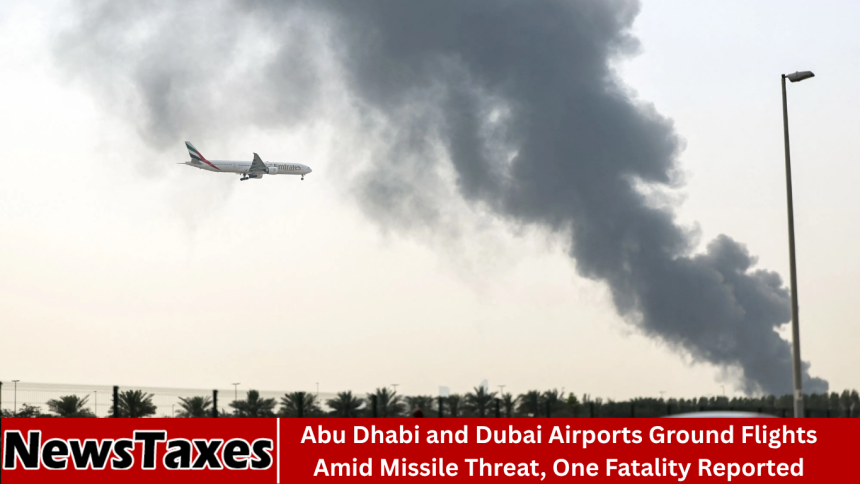
A sudden missile threat triggered widespread disruption at major airports in the United Arab Emirates, forcing authorities to ground flights and implement emergency safety protocols. Operations at Zayed International Airport in Abu Dhabi and Dubai International Airport in Dubai were temporarily suspended.
Officials later confirmed that at least one person was killed and several others were injured during the incident, sending shockwaves across the aviation sector and raising concerns about regional security. The disruption affected thousands of travelers, caused flight cancellations and delays.
And triggered global attention due to the strategic importance of UAE airports as major international hubs. This comprehensive report explores what happened, the immediate response, passenger impact, airline reactions, economic consequences, and what travelers should expect moving forward.
More Read: Trump’s Push for Iranian Regime Change May Be His Riskiest Move Yet
Sudden Missile Threat Causes Airport Shutdowns
The incident unfolded when missile alerts were issued across parts of the UAE. Air defense systems reportedly activated to intercept incoming threats, prompting immediate security responses at major airports.
Authorities quickly implemented emergency procedures, including:
- Grounding incoming and outgoing flights
- Evacuating certain airport zones
- Activating emergency response teams
- Inspecting airport infrastructure
- Issuing travel advisories
Passengers inside terminals reported confusion and concern as announcements informed them of delays and safety measures. Airport staff directed travelers to safe zones while authorities assessed the situation.
Within minutes, operations at major terminals were suspended to ensure passenger safety.
One Fatality Confirmed in Abu Dhabi
Officials later confirmed that one individual died following the incident in Abu Dhabi. Several others sustained injuries, with emergency responders quickly arriving at the scene.
Authorities reported:
- One confirmed fatality
- Multiple injured individuals
- Minor infrastructure damage
- Temporary airport shutdown
Medical teams treated injured passengers and airport staff, while security forces secured the affected areas. Hospitals in the region were placed on alert to handle potential casualties.
Emergency response teams worked quickly to restore calm and provide assistance.
Dubai Airport Experiences Major Disruption
Dubai International Airport also experienced disruption after missile alerts. Authorities temporarily halted flights and increased security measures.
Passengers reported:
- Flight cancellations
- Delays lasting several hours
- Congested terminals
- Increased security screening
Airport authorities coordinated with aviation regulators and defense systems to ensure safety before resuming operations.
Gradually, flights resumed once officials confirmed that the threat had subsided.
UAE Airports: Global Aviation Hubs
Airports in Abu Dhabi and Dubai are among the busiest in the world, serving millions of passengers annually. Any disruption to these hubs has global consequences.
These airports serve as major connections between:
- Europe
- Asia
- Africa
- North America
- Australia
When flights were grounded, ripple effects spread across global aviation networks, affecting airlines and passengers worldwide.
Airlines React to the Situation
Major airlines responded quickly to the crisis, prioritizing passenger safety.
Affected airlines included:
- Emirates
- Etihad Airways
- Flydubai
- International carriers
Airlines issued alerts advising passengers to check flight status before heading to the airport.
Several measures were implemented:
- Flight cancellations
- Schedule adjustments
- Rerouting flights
- Passenger assistance programs
Customer service teams worked around the clock to accommodate affected travelers.
Passenger Experiences During the Incident
Passengers described tense moments as announcements were made about flight suspensions. Many travelers were unsure about departure times and travel plans.
Reports from passengers included:
- Crowded waiting areas
- Frequent announcements
- Heightened security presence
- Uncertainty about travel plans
Some travelers were stranded overnight, while others were redirected to alternate flights.
Airport authorities provided assistance including:
- Hotel accommodations
- Food vouchers
- Rebooking options
Despite the chaos, officials emphasized safety as the top priority.
Government Response and Security Measures
UAE authorities responded swiftly to ensure safety and prevent further disruption.
Measures included:
- Activation of air defense systems
- Increased security at airports
- Temporary airspace monitoring
- Emergency coordination
Officials reassured travelers and residents that the situation was under control.
Authorities also launched investigations into the incident.
Impact on Global Aviation
The disruption had far-reaching consequences for global aviation.
Effects included:
- Flight rerouting
- Airspace avoidance
- Increased insurance risk
- Schedule disruptions
Airlines flying over the Middle East reviewed routes to ensure passenger safety.
International aviation authorities monitored developments closely.
Economic Impact of the Incident
The disruption affected multiple industries, including:
- Tourism
- Cargo transport
- Business travel
- Aviation sector
Dubai and Abu Dhabi rely heavily on international travel and tourism. Even temporary shutdowns can result in significant economic impact.
Experts estimate that aviation disruptions cost airlines millions of dollars.
Increased Security Measures at Airports
Following the incident, authorities strengthened security across UAE airports.
Enhanced measures included:
- Additional screening
- Increased surveillance
- Security patrols
- Emergency preparedness
Airports also reviewed emergency response protocols.
These steps aim to prevent future incidents and reassure travelers.
Regional Tensions and Security Concerns
The missile threat highlighted broader regional tensions affecting air travel safety. Experts warn that geopolitical conflicts can impact civilian infrastructure, including airports.
Aviation safety experts recommend:
- Continued monitoring
- Enhanced defenses
- Diplomatic efforts
Reducing regional tensions remains key to preventing future disruptions.
Travel Advice for Passengers
Travelers planning trips through UAE airports should:
- Check flight status regularly
- Arrive early
- Monitor airline updates
- Follow airport instructions
Flexibility is recommended due to potential changes.
Passengers are also advised to stay informed through official airline channels.
Recovery and Resumption of Operations
Flights resumed gradually after safety checks and security clearance.
Airports worked to:
- Clear backlog of delayed flights
- Assist stranded passengers
- Resume normal schedules
Authorities emphasized that safety remains the top priority.
Normal operations resumed within hours, though some delays continued.
Impact on Tourism Industry
Dubai and Abu Dhabi are major tourist destinations. The disruption raised concerns about travel safety.
Tourism officials emphasized:
- Strong security systems
- Quick response measures
- Commitment to traveler safety
Tourism operators continued monitoring the situation.
Future Risk Assessment
Experts suggest that similar incidents could occur if tensions persist.
Recommendations include:
- Enhanced airport defenses
- Improved monitoring systems
- International cooperation
Authorities remain vigilant.
Frequently Asked Question
Why were flights grounded at Abu Dhabi and Dubai airports?
Flights were grounded due to a missile threat that prompted authorities to suspend operations for safety.
Was anyone killed in the incident?
Yes, one person was killed in Abu Dhabi, and several others were injured.
Were both Abu Dhabi and Dubai airports affected?
Yes, both airports temporarily halted operations following the missile alerts.
How long were flights suspended?
Flights were suspended temporarily until authorities completed safety inspections.
Did airlines cancel flights?
Yes, several airlines canceled or delayed flights and rerouted services.
Is it safe to travel to the UAE now?
Authorities confirmed that safety measures are in place, and operations resumed.
Could similar incidents happen again?
Experts warn that risks remain if regional tensions continue.
Conclusion
The missile threat that grounded flights at Abu Dhabi and Dubai airports highlighted the vulnerability of global aviation to geopolitical tensions. While authorities acted quickly and operations resumed, the incident underscored the importance of safety and preparedness. Passengers experienced delays and uncertainty, but swift action helped prevent further casualties. As one fatality was confirmed and several individuals were injured, the event serves as a reminder of how regional tensions can impact global travel.