Artificial intelligence (AI) has evolved rapidly from a niche research field into the backbone of modern technology. From chatbots and recommendation systems to autonomous vehicles and advanced medical diagnostics, AI now powers tools widely used by businesses and consumers alike.
However, AI’s effectiveness depends heavily on computing hardware capable of handling enormous datasets and complex calculations in real time. One company at the forefront of AI hardware innovation is Nvidia. Known for its powerful graphics processing units (GPUs).
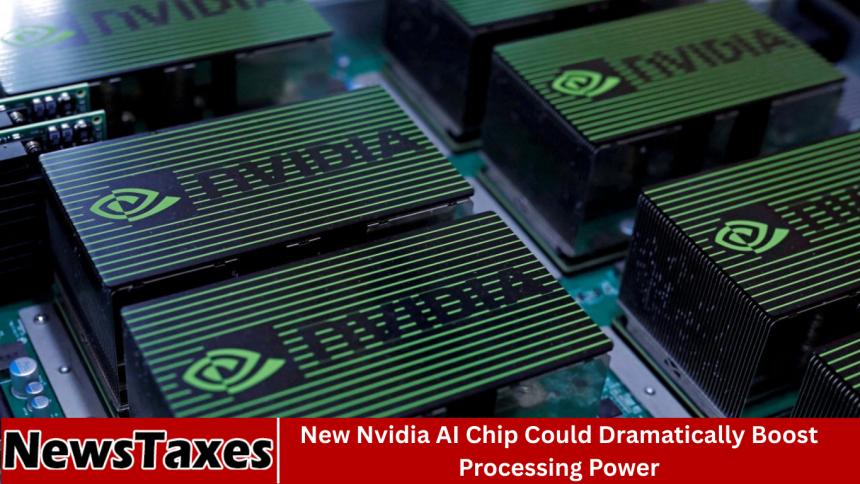
This next-generation chip focuses particularly on AI inference—the stage where trained AI models generate responses to real-world inputs. As the demand for AI applications continues to explode, faster inference speeds could transform industries ranging from cloud computing to robotics.
More Read: AI Crypto Skyrockets 140% in 90 Days — Opportunity or Risk?
The Rise of AI Computing
AI relies on enormous datasets and complex mathematical models. Training and running these models requires tremendous computational power. Traditional central processing units (CPUs) struggle with such workloads, which led to the rise of GPUs as the preferred solution.
GPUs excel at parallel processing, allowing thousands of calculations to run simultaneously. This capability makes them ideal for training deep learning models and handling large-scale data quickly.
Nvidia recognized this opportunity early and built specialized hardware and software ecosystems for AI development. Over time, its GPUs became the foundation of many AI platforms used by top technology companies worldwide.
The rapid growth of generative AI tools, including large language models and image generators, has increased the demand for high-performance chips even further. Analysts predict AI infrastructure spending will reach hundreds of billions of dollars in the coming years as global data centers expand.
Nvidia’s Dominance in AI Hardware
Nvidia’s success in the AI industry is rooted in its history of innovation. The company initially gained recognition for gaming GPUs but quickly realized these processors could accelerate machine learning tasks more efficiently than CPUs.
Over the past decade, Nvidia introduced multiple groundbreaking GPU architectures:
- Tesla
- Volta
- Ampere
- Hopper
- Blackwell
Each generation improved performance, efficiency, and AI capabilities. These chips power most modern AI data centers and research facilities.
For example, the Blackwell architecture includes advanced tensor cores designed to accelerate AI operations, enabling larger AI models to run faster while maintaining accuracy. With each new architecture, Nvidia continues to push the boundaries of AI computing.
Nvidia’s New AI Inference Chip
Nvidia’s upcoming chip is designed to optimize AI inference, a crucial but often overlooked stage in AI applications.
AI development involves two key stages:
- Training – Teaching the AI model using large datasets.
- Inference – Using the trained model to generate predictions or responses.
While training demands massive computational resources, inference occurs far more frequently in real-world applications such as chatbots, search engines, and recommendation systems.
Nvidia’s new chip is designed to handle inference at unprecedented speed and efficiency, allowing AI models to respond almost instantly.
Technology Behind the New AI Chip
Nvidia’s new processor introduces several innovations to maximize performance:
Specialized Architecture for AI Inference
Unlike traditional GPUs, which are general-purpose, the new chip’s architecture is tailored specifically for running AI models efficiently. This reduces unnecessary processing overhead and increases speed.
High-Speed Memory Design
The chip may utilize SRAM-based memory for faster access to frequently used data, improving AI inference performance and lowering costs compared to traditional high-bandwidth memory.
Seamless Integration with AI Software
Nvidia’s success relies on its hardware-software ecosystem, including tools like CUDA and TensorRT. The new chip is expected to integrate seamlessly with existing frameworks, making it easier for developers to optimize AI models without rewriting code.
Influence from Advanced AI Startups
Nvidia’s acquisition of AI chip startups has influenced the design of the new processor. Specialized concepts like language processing units (LPUs) may be incorporated to further accelerate AI inference.
The Vera Rubin Architecture
The chip is part of Nvidia’s roadmap that includes the Vera Rubin architecture, named after the renowned astronomer. Rubin combines a high-performance GPU with custom CPU technology to support large-scale AI workloads.
The architecture is expected to deliver significant performance improvements over previous GPUs, potentially reaching tens of petaflops in certain AI operations. This capability will support larger AI models and enable faster, more efficient processing across industries.
Why AI Inference Matters
While AI training garners much attention, inference is becoming a major bottleneck in many applications.
Every time a user interacts with a chatbot, searches online, or receives a recommendation, AI inference occurs. Analysts estimate that inference workloads could account for a majority of AI data center usage within the next decade.
Optimizing inference provides several benefits:
- Real-time AI responses
- Lower operational costs
- Reduced energy consumption
- Scalable AI services
Nvidia’s new chip is specifically designed to address these needs.
Growing Competition in AI Chips
Although Nvidia currently leads the AI chip market, competition is intensifying. Major companies and startups are developing processors to reduce reliance on Nvidia hardware:
- Google: Tensor Processing Units (TPUs)
- Amazon: Trainium and Inferentia chips
- AMD: AI accelerators and XDNA architecture
- Startups: Cerebras, Groq
These competitors often focus on specialized chips that outperform GPUs in specific AI inference tasks, driving Nvidia to innovate rapidly.
AI Data Centers and Power Demand
AI computing is energy-intensive. Large data centers consume substantial electricity to train and run models. As AI adoption grows, power efficiency becomes crucial.
Nvidia has incorporated power optimization in previous chips, and the new inference chip is expected to deliver higher performance while maintaining energy efficiency.
Potential Applications
The new Nvidia AI chip could impact multiple industries:
- Generative AI – Enabling real-time text, image, and video generation
- Cloud Computing – Allowing providers to process more requests efficiently
- Autonomous Vehicles – Improving decision-making in real-time
- Healthcare – Accelerating diagnostics and medical imaging analysis
- Robotics – Enhancing robots’ ability to interact intelligently with environments
Nvidia’s Strategic Advantage
By focusing on inference, Nvidia positions itself to maintain leadership as AI workloads shift. The company is also expanding into AI supercomputing platforms that integrate CPUs, GPUs, networking, and software to create powerful AI systems for large-scale applications.
Economic and Industry Impacts
AI hardware drives technological and economic cycles. Faster chips enable larger models, which create new applications, further increasing demand for hardware. Nvidia’s new chip could accelerate this cycle, shaping industries and technological growth.
Challenges Ahead
Despite its potential, Nvidia faces several challenges:
- Manufacturing Complexity – Advanced chips require cutting-edge semiconductor processes
- Energy Consumption – AI systems consume large amounts of electricity
- Supply Chain Constraints – Global chip production may not keep pace with demand
- Regulatory Concerns – Export controls and AI regulations could impact deployment
Future of AI Chips
The AI chip landscape is evolving rapidly. Future innovations may include optical computing, quantum-assisted processors, neuromorphic designs, and AI accelerators beyond traditional GPUs. Nvidia’s roadmap also includes architectures beyond Rubin, such as the Feynman architecture, aiming for higher performance and scalability.
Frequently Asked Question
What is Nvidia’s new AI chip designed for?
It is designed for AI inference, enabling trained models to generate predictions and responses quickly and efficiently.
How does inference differ from AI training?
Training involves teaching the model with data; inference uses the trained model to make predictions in real time.
Why is inference increasingly important?
Inference powers real-world AI applications like chatbots and recommendation systems, which are used constantly by millions of users.
What innovations might the chip include?
The chip may include specialized AI architecture, high-speed memory, and design influences from AI startups to optimize inference performance.
How could the chip improve AI performance?
It can reduce response times, enhance efficiency, and support larger AI models in real-time applications.
Who competes with Nvidia in AI chips?
Major competitors include Google, Amazon, AMD, and startups such as Cerebras and Groq.
When is the chip expected to be released?
While precise dates are pending, Nvidia is expected to provide details in upcoming developer events and product announcements.
Conclusion
Nvidia’s upcoming AI chip represents a major step forward in AI hardware. By focusing on inference, it aims to deliver faster responses, higher efficiency, and scalability for a wide range of AI applications. As AI adoption grows across industries, the demand for powerful, specialized computing infrastructure will continue to rise. Nvidia’s innovation could enable smarter AI tools, real-time applications, and more advanced technology, shaping the next era of AI development.