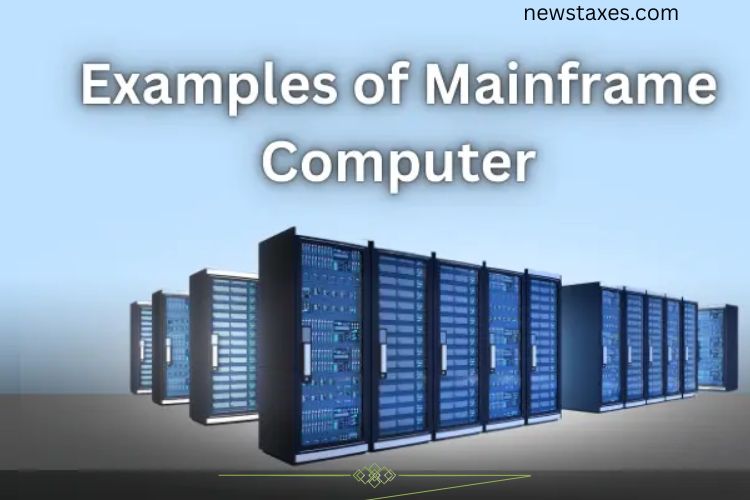
Mainframe computers play a vital role in industries that demand speed, reliability, and high-volume data processing. Sectors such as banking, healthcare, government, and aviation rely on these powerful systems to run mission-critical operations without downtime. Designed to handle massive workloads, mainframes ensure security, scalability, and consistent performance. Over the decades, many technology leaders have introduced advanced mainframe systems that continue to shape enterprise computing.
Below are ten notable examples of mainframe computers, explained in detail to highlight their uses, strengths, limitations, and historical significance.
Read More: What Is a Digital Computer?—The Ultimate Guide to Understanding Its Power and Potential
IBM Z Series
IBM Z Series stands as one of the most advanced and secure mainframe systems available today. Built for high-performance computing, it supports large-scale data processing while maintaining strong security standards.
Uses
Organizations across multiple industries depend on IBM Z Series. Banks rely on it for secure digital transactions, airlines manage reservations and passenger data, governments store official records, and large enterprises process customer information efficiently.
Benefits and Limitations
IBM Z Series delivers exceptional speed, reliability, and security. It processes enormous data volumes while remaining energy-efficient compared to older systems. However, high purchase costs, complex upgrades, and the need for skilled professionals can be challenging.
History
Introduced in 2000, IBM Z Series evolved continuously with improved performance, cloud integration, and AI support. Today, it remains a backbone for enterprises running critical workloads.
UNIVAC 1100 Series
UNIVAC 1100 Series is a classic mainframe computer designed for complex calculations and large-scale data handling. Its reliability made it a trusted choice for government and enterprise operations.
Uses
This system supports business data management, government record-keeping, scientific research, and financial transaction processing.
Pros and Cons
UNIVAC 1100 Series handles heavy workloads with stability and precision. However, high energy consumption, limited portability, and expensive maintenance reduce its practicality for smaller organizations.
History
Launched in the 1960s, UNIVAC 1100 Series became a foundation for large computing environments and remained relevant for decades due to its dependable performance.
Fujitsu GS21 Series
Fujitsu GS21 Series delivers fast and reliable performance for enterprises managing massive data workloads. Its efficiency makes it suitable for time-sensitive operations.
Uses
Banks use it for secure transactions, governments manage national data, researchers perform simulations, and enterprises process large datasets.
Strengths and Challenges
This system offers speed, security, and consistent performance. However, installation costs, physical space requirements, and the need for skilled operators can limit adoption.
History
Released in the early 2000s, Fujitsu GS21 Series targeted large organizations with demanding data processing needs and quickly earned industry trust.
Honeywell 6000 Series
Honeywell 6000 Series is designed for large-scale data management and industrial control systems. It handles complex calculations with reliability.
Uses
Industries use it to manage large databases, control manufacturing systems, and process sensitive government data.
Strengths and Limitations
Fast processing and strong reliability make this system valuable for critical environments. On the downside, maintenance costs, space requirements, and upgrade expenses pose challenges.
History
Introduced in the 1970s, Honeywell 6000 Series supported growing enterprise data needs and became widely adopted in industrial and governmental sectors.
ICL 2900 Series
ICL 2900 Series is a robust mainframe built for large-scale computing and long-term use. Its design supports complex business and government operations.
Uses
Organizations use it for data storage, financial transactions, scientific research, and sensitive record management.
Benefits and Drawbacks
The system offers high-speed processing, scalability, and strong reliability. However, high setup costs, specialized staffing requirements, and large physical size remain limitations.
History
Launched in the 1980s, ICL 2900 Series addressed the rising demand for powerful enterprise computing and became essential for public and private sectors.
Hitachi Z-Series
Hitachi Z-Series is known for dependable performance and enterprise-level scalability. It supports complex applications across critical industries.
Uses
Banks process transactions, healthcare organizations manage patient records, and governments handle confidential data using this system.
Advantages and Challenges
Hitachi Z-Series delivers speed, security, and scalability. Still, installation expenses, complex upgrades, and reliance on skilled professionals increase operational costs.
History
Introduced in the 1990s, the series evolved with enhanced processing power and remains a trusted solution for secure data management.
Bull DPX Series
Bull DPX Series is a high-performance mainframe designed for demanding enterprise environments. It supports large-scale transaction processing with reliability.
Uses
Businesses process transactions, governments run administrative systems, financial institutions manage data, and researchers analyze scientific information.
Strengths and Weaknesses
The system offers fast processing, scalability, and strong security. However, high costs, space requirements, and complex upgrades present challenges.
History
Developed in the 1980s, Bull DPX Series improved steadily and became a reliable option for organizations handling sensitive workloads.
Hewlett-Packard NonStop
Hewlett-Packard NonStop is built for continuous availability and fault tolerance. It ensures uninterrupted operations where downtime is unacceptable.
Uses
Banks process transactions, telecom companies manage networks, e-commerce platforms ensure uptime, and enterprises handle critical data.
Pros and Cons
NonStop systems offer unmatched availability and reliability. However, high installation costs, large physical space, and specialized expertise requirements limit accessibility.
History
Created in the 1970s, HP NonStop addressed the need for nonstop operations and remains essential for mission-critical environments.
Burroughs B5000
Burroughs B5000 introduced innovative design principles focused on business computing efficiency. Its architecture simplified programming and data handling.
Uses
Organizations used it for accounting, financial processing, banking operations, and scientific calculations.
Strengths and Challenges
The system provided reliable business computing and user-friendly programming. Over time, aging technology, size, and maintenance costs reduced its competitiveness.
History
Released in the 1960s, Burroughs B5000 revolutionized business computing and influenced future system designs.
DEC VAX Series
Digital Equipment Corporation VAX Series offered flexible and powerful computing for both scientific and commercial use. Its adaptability supported a wide range of applications.
Uses
VAX systems supported scientific research, business data processing, financial analysis, and large databases.
Advantages and Disadvantages
Strong performance, flexibility, and software compatibility defined the VAX Series. However, high costs, complex configuration, and large hardware footprint posed challenges.
History
Introduced in the late 1970s, DEC VAX Series became widely popular in academia and enterprise environments and shaped modern computing platforms.
Frequently Asked Questions:
What is a mainframe computer?
A mainframe computer is a high-performance system designed to process massive amounts of data reliably and securely for large organizations.
Why do industries still use mainframe computers?
Industries use mainframes because they offer unmatched reliability, security, scalability, and the ability to handle millions of transactions simultaneously.
Which companies manufacture powerful mainframe computers?
Leading manufacturers include IBM, Fujitsu, Hitachi, Hewlett-Packard, Bull, and other established technology giants.
What makes IBM mainframe computers so powerful?
IBM mainframes deliver advanced security, high processing speed, cloud integration, and the ability to handle critical workloads without downtime.
How are Fujitsu mainframe computers used in enterprises?
Fujitsu mainframes support secure financial transactions, large-scale data processing, government systems, and mission-critical business applications.
Are mainframe computers more secure than other systems?
Mainframe computers provide enterprise-level security features, making them highly resistant to cyber threats and data breaches.
What industries rely most on mainframe computers?
Banking, healthcare, government, airlines, telecommunications, and large enterprises depend heavily on mainframes for critical operations.
Conclusion
Powerful mainframe computers continue to serve as the backbone of modern enterprise computing. Systems from industry giants like IBM, Fujitsu, Hitachi, and Hewlett-Packard deliver unmatched reliability, security, and performance for organizations handling massive data workloads. Despite the rise of cloud and distributed computing, mainframes remain essential for mission-critical operations that demand constant uptime and high-speed processing. Their ability to evolve with modern technologies ensures they will remain a trusted solution for large enterprises well into the future.